Health and Safety Policy for Gardening Sidcup
Gardening Sidcup is committed to delivering safe, reliable and professional garden care across the service area. This Health and Safety policy sets out the standards expected of all Sidcup gardening services staff, contractors and subcontractors, and describes how we manage risks associated with garden maintenance Sidcup work. The aim is to protect employees, clients, the public and the environment while ensuring high-quality horticultural outcomes. This policy applies to routine garden maintenance, landscaping projects, tree and hedge work, and seasonal operations.
All Sidcup gardeners must understand and follow this policy. Management will ensure resources, supervision and training are provided, and that risk assessments are carried out before work begins. The policy reflects a hierarchy of controls: eliminate hazards where possible, substitute less hazardous methods, apply engineering and administrative controls, and provide personal protective equipment (PPE) as a last line of defense. Pre-work checks, documented procedures and regular communication are central to our approach.

Responsibilities and Risk Management
Responsibility for health and safety is shared. Managers will maintain safe systems, review operations and keep records. Supervisors must ensure tools, machinery and vehicles are maintained and operated safely. Individual employees are expected to take reasonable care, report hazards, and comply with safe systems. We conduct formal risk assessments for all garden services, including small-scale domestic jobs and larger commercial contracts. Hazard identification covers machinery (mowers, chainsaws), manual handling, slips and trips, chemical use, traffic and public interaction. Controls are documented and reviewed regularly.

Hazards, Controls and Safe Working Practices
Our control measures include routine inspection, lock-out/tag-out for equipment, safe storage of fuels and pesticides, and clear exclusion zones for public safety. The following list summarises typical hazards and controls:
- Machinery and power tools: Regular servicing, trained operators, guards in place, and use of hearing and eye protection.
- Manual handling: Use of mechanical aids, team lifts, and clear manual handling guidance to prevent musculoskeletal injuries.
- Chemical and pesticide use: COSHH-style assessments, correct PPE, secure storage and disposal, with spill response plans.
- Traffic and site access: High-visibility clothing, cones and signage, and safe vehicle loading/unloading procedures.
- Public interaction: Clear notices, cordons, and customer briefings to reduce risks to residents, pets and passers-by.
Controls are proportionate to the task. Where tasks are low risk we maintain simple but effective procedures; higher risk activities follow documented method statements and supervision.
Training, PPE and Equipment
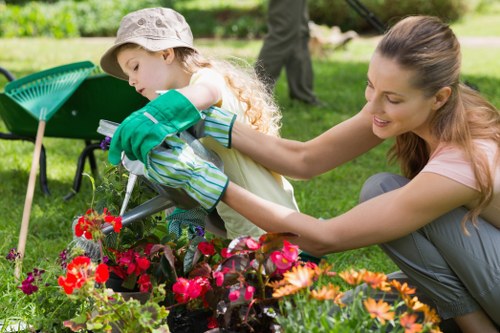
Training is mandatory for all employees and covers safe operation of mowers, brushcutters, chainsaws, pressure washers and lifting equipment. We ensure staff competence through induction, refresher training and competency checks. PPE such as gloves, steel-toe boots, eye and ear protection, and protective clothing are supplied and must be worn when required. Equipment is inspected before use, with defective items removed from service and reported. Batteries, fuel and charging procedures are managed to minimise fire and contamination risks.

Emergency Procedures, Reporting and Continuous Improvement
Emergency plans include first-aid arrangements, incident reporting and escalation. First-aiders are appointed and first-aid kits maintained. All incidents, near misses and unsafe acts are reported and investigated to identify root causes and prevent recurrence. We maintain a culture of continuous improvement through audits, toolbox talks and periodic policy reviews. Record keeping ensures training, inspections and incident histories are available for review and learning. Our objective is to reduce incidents year-on-year and to adapt practices based on lessons learned.
The policy also covers environmental protection during landscaping and garden maintenance Sidcup operations: correct disposal of green waste, careful use of fertilisers and herbicides, and measures to protect soil and watercourses. Contractors and temporary workers receive site-specific briefings and must adhere to our standards. Lone working is risk-assessed, with check-in procedures and emergency contact protocols in place to ensure safety when staff work independently.
Review of this Health and Safety policy for local gardening Sidcup activities is undertaken annually or after any significant change to operations. The policy supports a proactive safety culture and is communicated to all staff, clients and partners as appropriate. By following these principles we ensure that our garden maintenance Sidcup services remain safe, reliable and respectful of people and the environment.